
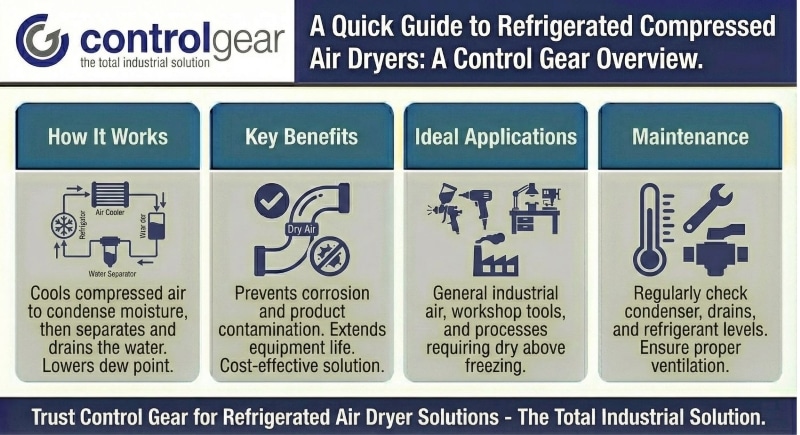
A Quick Guide to Refrigerated Compressed Air Dryers
Moisture is unavoidable in compressed air systems.
Every compressor draws in ambient air, and there’s always water vapour mixed in with it. Squeeze that air and its capacity to hold moisture increases – at least for a while.
Then the air cools as it moves through the system – and that vapour condenses into liquid water.
If it’s left alone, that moisture doesn’t stay harmless for long. Systems become harder to run and harder to keep clean. And in some cases, it shows up where you really don’t want it – on the finished product. Pipework starts to corrode. Air-powered tools wear out faster or fail altogether.
In most industrial environments, a refrigerated air dryer is the go-to option. It strips out moisture consistently and provides a dependable flow of clean, dry air – enough for the vast majority of applications.
How Refrigerated Air Dryers Work
Refrigerated air dryers work in much the same way as an air conditioner. Compressed air passes through the unit and is intentionally cooled, bringing the temperature down enough for moisture to be dealt with.
That temperature drop forces the moisture out of suspension – vapour turns to liquid because it has nowhere else to go.
From there, the water is physically separated and removed. What’s left continues downstream as much drier compressed air.
The process can be broken down into the following steps:
- Cooling: Heat is drawn out of the compressed air by the refrigerant circuit. This pulls the temperature right down – normally to around +3 °C.
- Condensation: Once it reaches that point, the moisture has nowhere to go. It then begins to separate out as liquid water.
- Separation: A water separator takes the liquid out of the air stream.
- Drainage: The water goes out through a drain.
- Reheating: The air that comes out of the dryer is warmed up a little bit so that the pipes don’t sweat.
Types of Refrigerated Dryers
Choosing the right dryer comes down to two main factors – how much compressed air you need, and how tightly you want to control energy use.
Control Gear has the full line of Atlas Copco products, which are made for different operational needs.
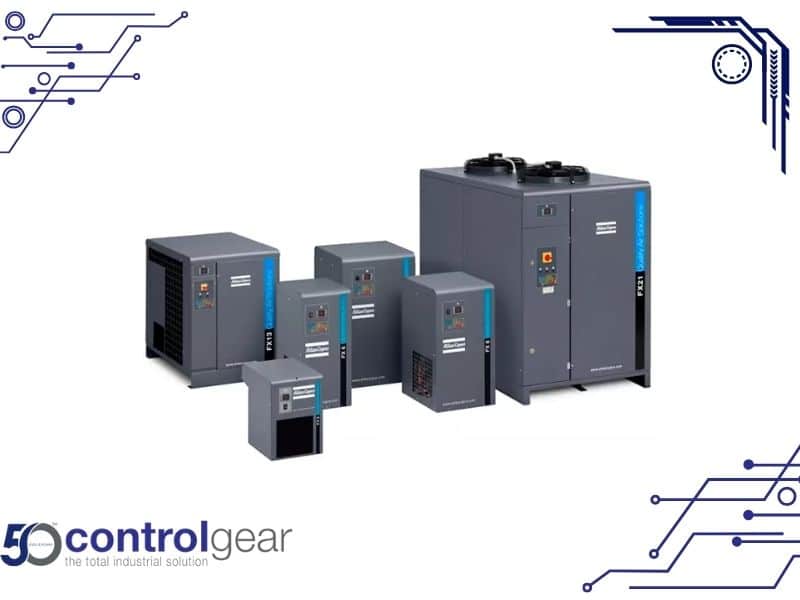
Non-Cycling Dryers (FX Series)
These are the standard choice for steady operations.
To keep the temperature steady, the dryer’s compressor runs all the time. They are dependable and affordable for workshops or buildings that always need air.
Cycling Dryers (FD Series)
The design of cycling dryers makes them energy-efficient.
They stop the dryer compressor with a “Saver Cycle” when the air is already dry enough. This cuts down on energy use when demand is low. They keep the pressure drop low, which makes the main air compressor work better.
Variable Speed Drive (VSD) Dryers
VSD dryers offer the highest efficiency.
The dryer changes the speed of its motor on its own depending on how much air it needs. This keeps the dew point steady while using as little energy as possible. They are perfect for places where the production schedule changes.
Why Correct Sizing Matters
A common mistake is to choose a dryer based only on how much air it moves. The environment in which it runs has a big effect on how well it works.
Most refrigerated dryers are rated for a specific ambient temperature – often around 25 °C.
In practice, many compressor rooms in the UK run well above that, particularly through the summer.
When the surrounding air is hotter, the dryer has to work harder to pull heat out of the compressed air.
Push it far enough, and it simply can’t remove moisture as effectively. If the inlet air is too warm, some water will pass straight through instead of being condensed and drained.
Correction factors are used to size a dryer properly. They allow for real operating conditions, rather than ideal ones, including:
- Ambient temperature – how hot the compressor room gets in normal use.
- Inlet temperature – the temperature of the air as it leaves the compressor.
- System pressure – lower pressures reduce drying efficiency, so a larger dryer is often needed.
Taking those variables into account means the dryer performs as it should in day-to-day operation – not just under ideal conditions, but right through the year.
Maintenance and Reliability
Keeping up with the maintenance of your air dryer helps to stop moisture problems before they start.
Modern dryers are designed to be dependable – but they still need regular attention to keep working properly.
- Check the drains: The condensate drain is what removes water from the system. If it becomes blocked, liquid can build up – and even be pushed back into the pipework.
- Clean the condenser: Dust and debris can build up on the cooling fins. This traps heat inside the unit. Clear them regularly, and the dryer can shed heat properly, improving efficiency in the process.
- Monitor the dew point: Many units have a display. Checking this regularly confirms the dryer is working as expected.
Compliance and Best Practices
Operating compressed air equipment involves meeting certain UK regulations.
Air Quality Standards
Refrigerated dryers are made to meet ISO 8573-1 standards for use in most industries.
This level of air quality is usually sufficient for general manufacturing. On top of that, it also helps pneumatic tools run properly – without adding extra wear or risking contamination.
Safety and Environmental Rules
Since these dryers use refrigerant gas, they fall under F-Gas regulations.
This may require periodic leak checks depending on the size of the unit. Additionally, the PSSR (Pressure Systems Safety Regulations) guidelines suggest including dryers in your system’s Written Scheme of Examination.
Condensate Disposal
The water removed by the dryer often contains traces of oil.
This condensate must not be poured directly into drains. Passing it through an oil-water separator ensures compliance with environmental laws.
Next Steps for Your Air System
If moisture isn’t managed, both equipment and products are at risk. Size the refrigerated dryer properly and the system settles down – fewer issues, more consistent performance, and lower maintenance overheads.
Control Gear can help you assess your current setup. We can check your operating conditions and recommend the most energy-efficient solution for your facility.
Contact us today to discuss your air treatment needs.