
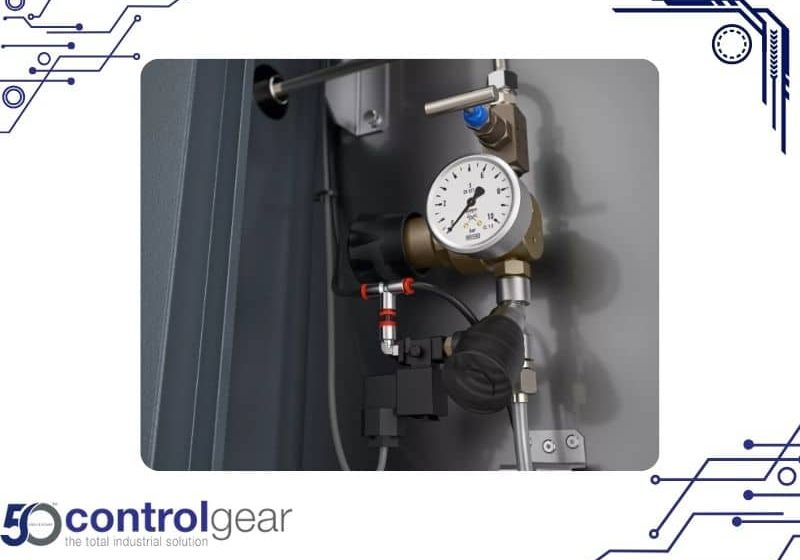
How to Read Air Compressor Gauges
Accurate pressure readings are the only way to ensure your compressed air system operates safely. Misinterpreting a gauge often leads to dangerous over-pressurisation or expensive energy waste. Our engineering team installs and maintains thousands of Bourdon tube and digital gauges across the UK.
We know exactly how to interpret these instruments to maintain PSSR 2000 compliance. This guide covers how to read tank and regulator gauges, understand PSI versus bar, and spot calibration issues.
Why Is Accurate Gauge Reading Critical for UK Industry?
Accurate gauge reading is critical because it directly controls energy costs and ensures compliance with strict safety regulations like the Pressure Systems Safety Regulations 2000 (hse.gov.uk). If you misread a gauge by just 1 bar, your compressor consumes 7% more energy to generate unnecessary pressure.
This artificial demand inflates your Total Cost of Ownership (TCO) significantly. For a standard 75 kW compressor running 4,000 hours annually, that single bar of excess pressure adds thousands of pounds to your electricity bill.
Beyond financial loss, over-pressurisation risks catastrophic failure. We often see safety valves lifting on older reciprocating compressors because operators ignored creeping gauge needles. To be honest, most of the cheap 40mm dials we replace are so clouded up with oil mist you can barely read the numbers anyway.
The Impact of Inaccuracy:
- Energy Penalty: 1 bar over-pressure = 7% higher power use.
- Safety Risk: Breach of Safe Operating Limits (SOL).
- Tool Damage: Pneumatic tools wear out 20% faster at excessive pressures.
Once you understand the cost of inaccuracy, you need to know which gauge type best prevents these errors.
What Is the Difference Between Tank and Regulated Pressure?
Tank pressure shows the total air stored in the receiver, while regulated pressure shows the specific force delivered to your tools. This distinction ensures the supply side holds enough reserve energy while the demand side receives a safe, consistent flow. You must monitor both to maintain system efficiency.
On industrial air compressors from manufacturers like Atlas Copco, the tank gauge often reads higher than the regulated gauge. For example, a tank might sit at 10 bar (145 PSI) while the regulator limits output to 6.2 bar (90 PSI). Operating above the rated regulated pressure can damage pneumatic tools and violate PSSR 2000 (hse.gov.uk) safety standards.
Most gauges display two scales. We use this conversion reference for quick checks:
| Unit | Tank Gauge (Supply) | Regulated Gauge (Demand) |
| Bar | Measures stored volume (e.g. 10 bar) | Measures tool input (e.g. 6 bar) |
| PSI | High range (0 – 232 PSI) | Lower range (0 – 150 PSI) |
| Ratio | 1 Bar ≈ 14.5 PSI | 1 Bar ≈ 14.5 PSI |
Understanding these values is critical, but the type of gauge face you use determines how easily you can read them.

How Do You Read Modern Digital Displays like the Elektronikon?
You read modern digital displays by navigating the touchscreen interface to view real-time discharge pressure and the machine’s running state. Unlike static analogue gauges, controllers like the Elektronikon Touch display dynamic graphs and specific status icons that change based on sensor feedback.
When monitoring differential pressure specifically, you should check for readings between 0.8 to 1.0 bar. This range ensures optimal filtration efficiency and prevents excessive energy consumption.
We look for three main indicators on the home screen:
- Loading/Unloading Status: Shows if the motor is driving the element to generate air or running idle.
- Discharge Pressure: The current system pressure, typically displayed in bar or psi.
- Service Icons: Visual alerts (yellow for warning, red for shutdown) based on pre-set running hours.
Remote monitoring tools like SMARTLINK mirror this display to your phone. This allows us to track differential pressure trends and identify blocked filters before they cause energy losses. Once you can interpret these digital readings, you must understand the strict safety regulations governing the equipment.
How Should You Adjust Regulators for Optimal Tool Performance?
You must adjust regulators by setting the dynamic pressure while the tool is fully active to compensate for droop. This phenomenon causes a measurable pressure drop between the static reading and the actual flow pressure during use. If you calibrate a Chicago Pneumatic impact wrench while it’s idle, it will lack torque under load.
Follow this standard procedure for accurate calibration:
1. Access the regulator knob by pulling it upwards or loosening the locking nut.
2. Fully activate your pneumatic tools to generate airflow.
3. Rotate the knob clockwise to increase pressure until the gauge reads the required 6.3 bar (90 PSI).
4. Push the knob down to lock the setting.
We often see operators ignoring flow restrictions. Even a high-end Atlas Copco regulator can’t fix a starved tool if the initial setting is wrong. It’s actually quite difficult to get the setting precise on those smaller regulators when your gloves are covered in grease. Correct pressure settings prevent premature wear and ensure consistent torque output.
What Do Common Gauge Issues Tell You About System Health?
Common gauge physical symptoms directly show specific systemic failures, ranging from air leaks to dangerous over-pressurisation events. While system-wide leaks typically account for 20-30% of air loss in industrial compressed air systems, interpreting your gauge correctly allows you to reduce this waste.
A rapidly fluttering needle often signals a lack of liquid damping or severe compressor pump vibration. Conversely, a gauge that fails to return to zero proves permanent calibration drift or internal Bourdon tube damage.
Ignoring these visual cues compromises safety and violates compliance standards. We reference the Pressure Systems Safety Regulations 2000 (PSSR) because accurate gauge readings are a legal requirement for safe system operation. A stuck needle typically suggests moisture ingress has caused corrosion or a pressure spike exceeded the gauge’s full-scale deflection.
Troubleshooting Key Indicators:
- Needle Flutter: Shows excessive system vibration or low glycerine fill levels.
- Stuck Needle: Result of corrosion or pressure spikes beyond the 0-16 bar range.
- Slow Pressure Drop: Signals downstream leaks in hoses or pneumatic fittings.
- Non-Zero Return: Mechanical fatigue requiring immediate replacement.
Identifying these physical defects is the prerequisite for establishing a compliant maintenance schedule.
Speak to Our Engineers
Accurate gauge readings ensure safety and drive cost savings. Consider upgrading to digital monitoring with Elektronikon units for precision – supported by our 24/7 service across South Wales and the West. For expert calibration, a PSSR inspection, or to upgrade to digital monitoring, contact Control Gear‘s team in Pontypridd today.