
Role of Regulators in Air Compressors
The role of regulators in air compressors is often underestimated until inconsistent pressure damages expensive pneumatic tools. Without precise control, systems waste energy and suffer from fluctuating performance. At Control Gear, our engineers have spent decades optimising industrial systems across the UK to prevent these costly inefficiencies.
This guide explains how regulators function, the different types available, and how to select the right one for your specific application.
What Is the Primary Function of an Air Regulator?
Compressors typically generate variable supply pressure, but your downstream tools require a constant, lower output to function safely. A regulator acts as a throttle. It automatically adjusts flow to ensure equipment receives stable force regardless of fluctuations in the compressed air distribution network. Without this control, high-pressure spikes can damage sensitive pneumatic components and seals.
We recently audited a manufacturing facility in Bristol running their Atlas Copco GA VSD+ compressors at 8 bar, despite their application only requiring 6 bar. This excess pressure created Artificial Demand, forcing air out of unregulated tools and leaks at a much higher rate than necessary. It essentially wastes energy to pressurise air that is not actually needed.
Reducing this pressure is the most effective way to lower energy bills. According to the British Compressed Air Society (BCAS), strict pressure control offers clear benefits:
- Reducing system pressure by 1 bar saves 7% in energy consumption.
- It lowers the leak rate by around 13%.
- It prevents mechanical stress on point-of-use tools.
There is a critical distinction between generation pressure and point-of-use pressure. You must understand the relationship between CFM and PSI to balance the supply from the compressor room with the actual needs of the factory floor.
How Does the Internal Mechanism Work?
A calibrated adjusting spring creates a continuous force balance against a flexible diaphragm to regulate airflow automatically. When downstream demand increases, the resulting pressure drop allows the spring to push the diaphragm down.
This action opens the poppet valve – a plug-like mechanism that seals the opening – to let more air through. Conversely, when demand stops, rising downstream pressure pushes the diaphragm up against the spring to seal the valve.
This mechanical “tug-of-war” ensures the output remains stable regardless of fluctuations from the compressor. In high-quality units like the Norgren Excelon Plus, a synthetic rubber diaphragm acts as the sensing element.
This reacts instantly to pressure changes. I have actually taken apart a few older units where the rubber had gone completely brittle from oil carryover and it is a nightmare to scrape off the valve seat.
Here is the sequence of operation during a typical cycle:
1. Demand Increases: Downstream pressure falls below the set point.
2. Valve Opens: The spring overcomes the diaphragm’s resistance, pushing the poppet open.
3. Equilibrium: Pressure rises until it equals the spring force, closing the valve to prevent over-pressurisation.
Which Type of Regulator Does Your System Need?
Flow rate and safety requirements dictate whether you need a relieving or non-relieving model. For most standard pneumatic tools, a relieving regulator is the correct choice because it automatically vents excess downstream pressure. High-precision industrial processes often need pilot-operated units to maintain stability even with a 0.5 bar pressure fluctuation.
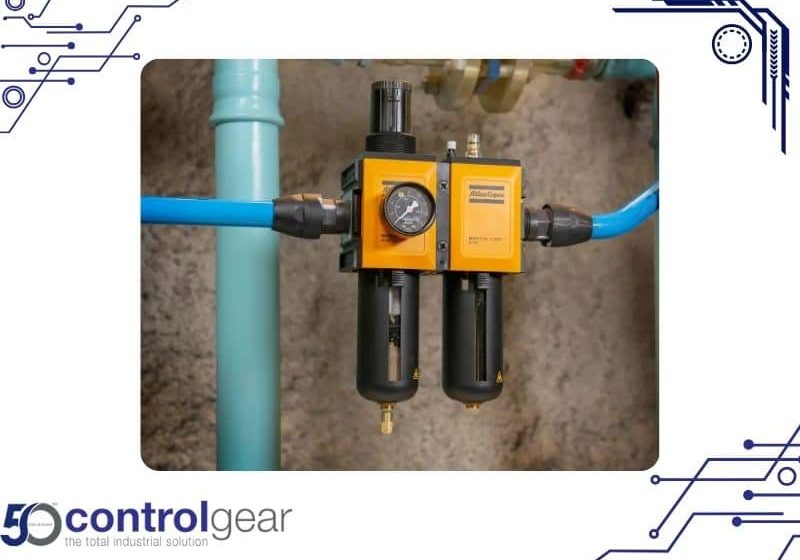
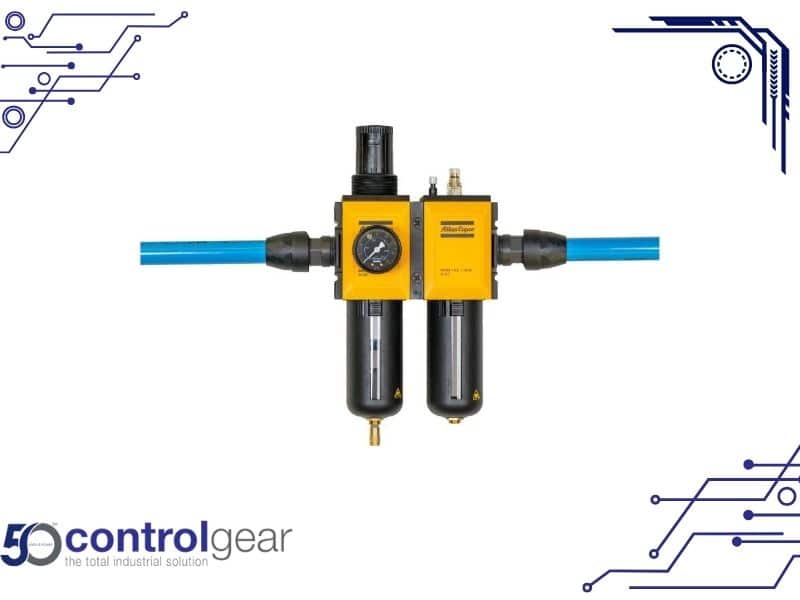
We often recommend combining regulation with air treatment for efficiency. Filter-Regulator-Lubricators (FRLs) offer a compact solution that cleans air while controlling pressure. This integration protects downstream equipment, such as Atlas Copco pneumatic tools, from moisture and particulate damage.
Safety is the main differentiator between relieving and non-relieving models. To be honest, we still see people buying the wrong type off the shelf just because it looks identical on the outside. A non-relieving regulator traps excess pressure and does not vent it into the atmosphere. This makes it essential for handling hazardous or expensive gases. For standard compressed air, relieving models are safer as they prevent dangerous pressure build-up during adjustments.
If your facility demands high flow rates with minimal pressure droop, a pilot-operated regulator is superior to standard spring-loaded types. These use air pressure against a diaphragm for control rather than a physical spring. This design ensures consistent output pressure even when demand fluctuates rapidly.
How Does Atlas Copco Technology Optimise Regulation?
Traditional mechanical valves often create wide pressure bands, but the Elektronikon operating system and Variable Speed Drive (VSD) technology match motor speed directly to air demand. These intelligent controls maintain a stable net pressure within a tight range. This digital approach eliminates the energy waste associated with over-pressurisation.
Modern units from Atlas Copco, a global leader in sustainable productivity solutions, use three core technologies to refine pressure control:
- Elektronikon Controller: Lowers the system pressure band. This potentially reduces energy costs by 7% for every 1 bar reduction.
- VSD Integration: Automatically adjusts the motor’s RPM to match air usage. This removes the need for inefficient load/unload cycles.
- SmartLink: Enables remote monitoring of pressure bands. It sends alerts to your mobile device if the regulation deviates from the set parameters.
Our engineers use these digital tools to fine-tune your system. We ensure the compressor does not generate more pressure than your application actually needs.
Are Your Regulators Compliant with UK Safety Standards?
Compliance relies on strict adherence to the Pressure Systems Safety Regulations 2000 (PSSR) (hse.gov.uk). This legislation mandates a Written Scheme of Examination (WSE) for any compressed air system exceeding 250 bar-litres. Without this certified document, operating your pressure network is illegal in the UK.
The Health and Safety Executive (HSE) requires a ‘competent person’ to draft and certify your WSE. This document must explicitly list every safety device, including pressure relief valves and downstream regulators. We frequently encounter sites that fail inspections because regulators are excluded from the mandatory maintenance schedule.
For sectors like food and beverage, compliance extends beyond pressure limits to air purity. The BCAS 102 code of practice sets strict hygiene standards for compressed air. If a regulator introduces contaminants into a Class 0 oil-free line, you risk product spoilage and measurable regulatory fines.
Our compliance checks focus on three critical areas:
- Verifying the WSE covers all expansion vessels.
- Ensuring regulators are rated for the maximum system pressure (PS).
- Confirming maintenance logs exist for all safety devices.
Contact Control Gear for Expert Support
Correctly managing pressure helps you save money and maintain strict safety standards. Control Gear delivers the Total Industrial Solution to businesses throughout South Wales and the West of England.
Whether you need a PSSR inspection or a system upgrade, contact our team in Pontypridd or Newton Abbot today for a worry-free solution.