Air Compressors for Construction Industry
On any construction site in the modern era, compressed air isn’t just another tool in your box. It’s your link to uptime. The right compressor for the job doesn’t just power your tools, it reduces breakdowns, protects your team, and saves you money through intelligent energy use. This guide will show you how to find the right one.
Compressed air is the fourth utility. It’s every bit as important as electricity, gas, and water. It powers your tools, streamlines workflows, and keeps your site running. That’s especially true during those remote, pre-grid construction phases, where a single portable compressor serves as the energy hub for your entire crew.
Choosing the right unit is a critical decision. An undersized or unreliable compressor creates bottlenecks, while a correctly specified machine keeps your project on schedule and on budget.

Why Pneumatic Power is Essential on UK Construction Sites
Pneumatic tools are preferred over electric for a simple reason: they’re built for the demanding realities of a construction site.
Superior Safety in Tough Conditions
The UK’s unpredictable weather makes electrical tools a hazard. Pneumatic tools eliminate the risk of electrocution on damp sites. Because they don’t generate sparks, they also reduce fire and explosion risks. Air tools work reliably in rain or dust conditions that are routine in UK construction.
Durability and Reliability
The pneumatic tool is mechanically simple, the fewer moving parts, the less that can go wrong. Air tools are more robust, less susceptible to breakdown, and need less maintenance. Fewer breakdowns mean less downtime and a longer tool life. Air tools also tend to be lighter than electric alternatives. They lack a heavy internal combustion motor, making a big difference in operator fatigue over the course of a long day’s work.
Unmatched Productivity Gains
A well-tuned air compressor provides a steady stream of power. This makes workflow easier and faster for critical applications. Replacing manual framing with a pneumatic nail gun can save up to 60% in framing time. Impact wrenches reduce time for steel assembly, which increases team throughput.

Common Applications Across the Project Lifecycle
Compressed air is a versatile power source used at every stage of construction. The sheer range of industrial applications of air compressors demonstrates their value.
- Demolition & Groundworks: Break through barriers with pneumatic jackhammers, pavement breakers, and rock drills designed for site preparation.
- Framing & Assembly: Fasten and assemble with pneumatic nail guns, impact wrenches, and riveters for efficient progress as the structure comes together.
- Finishing: Pneumatic grinders, sanders, sandblasters, and spray painters help deliver that high-quality, professional finish.
- Site Operations: Beyond the main tasks, compressed air is invaluable for ancillary operations like tyre inflation, pneumatic hoisting, and cleaning work surfaces with air blowguns.
Selecting the Right Air Compressor Technology

Making an informed choice requires understanding the different types of air compressors and their suitability for construction.
Rotary Screw vs. Piston Compressors
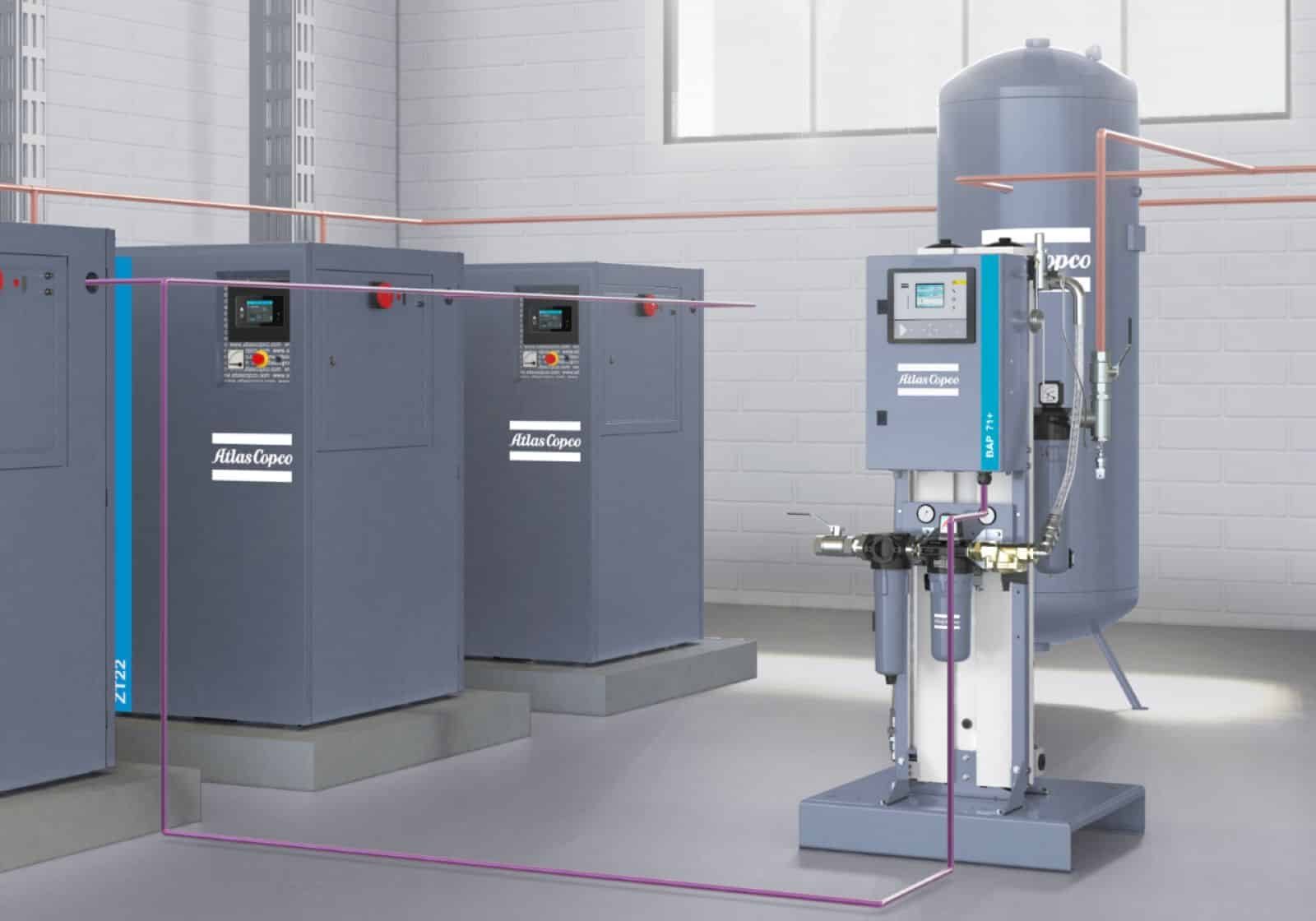
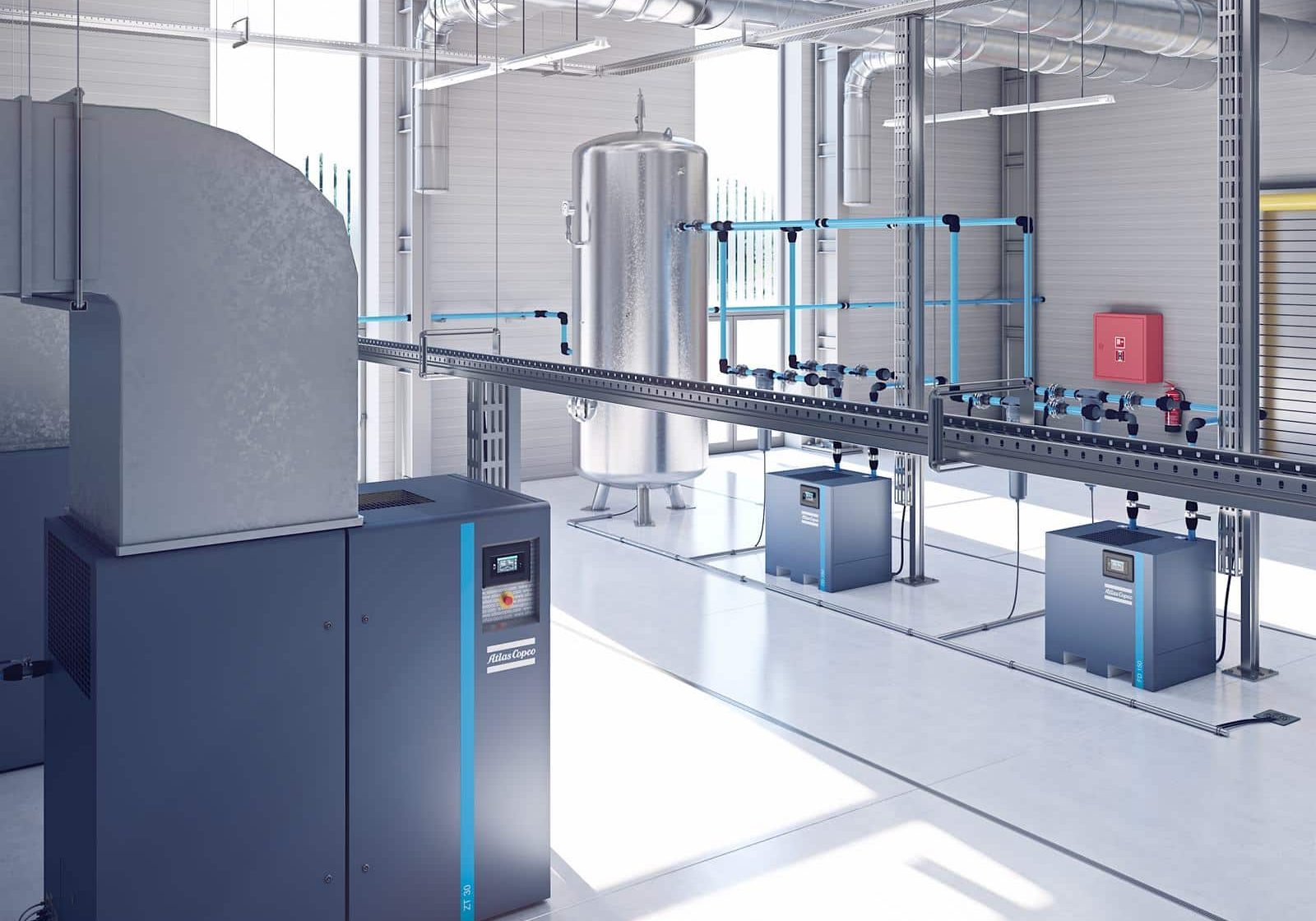
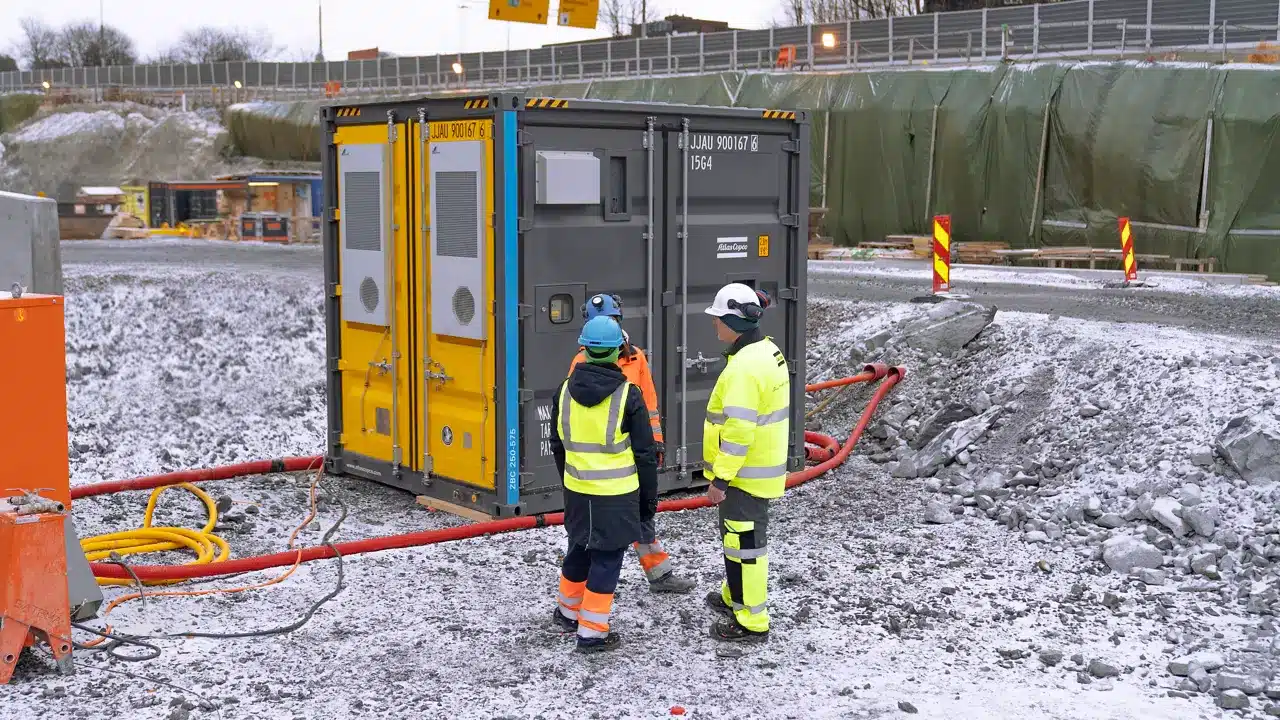
Rotary screw compressors are the professional construction standard. They are built for a 100% duty cycle, so they can run for long periods without overheating. We are proud to be premier distributors of Atlas Copco's 8 Series rotary screw compressors. Atlas Copco has a reputation for building reliable, rugged compressors, and their units are no exception.
The robust, non-corrosive HardHat® canopy is built to withstand the rigours of a job site. Many of these compressors are under 750 kg for easy towing, a significant logistical benefit. Piston compressors are designed for intermittent and low demand use only and need time to cool down.
Diesel vs. Electric Power
The choice of power source depends entirely on your site conditions.
- Diesel Compressors: The default choice for remote or new sites without grid access.
- Electric Compressors: Offer a significantly lower total cost of ownership, produce zero on-site emissions, and are substantially quieter, ideal for urban or indoor work.
Whether you need an oil-lubricated or oil-free air compressor, the application dictates the choice. Oil-lubricated models are durable workhorses, while oil-free units are essential for applications like finishing where air purity is critical.
How to Correctly Size Your Compressor for the Job
Incorrectly sizing a compressor is a common and costly mistake. Base your decision on the air demand of your tools, not guesswork.
Understanding CFM and PSI
- CFM (Cubic Feet per Minute): The volume of air a compressor produces. This is the most important factor, as it dictates how many tools you can power.
- PSI (Pounds per Square Inch): The pressure at which air is delivered. Most tools operate between 70-90 PSI.
Remember: CFM determines how many tools you can run, while PSI ensures each tool performs properly. You need both for optimum performance.
A Practical Calculation for Air Demand
Follow these steps to determine your site's minimum CFM requirement:
- List Your Tools: Inventory every tool that will be used simultaneously.
- Find Individual CFM: Note the CFM requirement for each tool.
- Sum the Demand: Add the CFM requirements of all tools that will run at the same time.
- Add a Safety Margin: Add a 25-30% buffer to the total.
For example, for a team running three tools that each require 60 CFM:
(3 tools x 60 CFM) = 180 CFM.
180 CFM x 1.25 (25% safety margin) = 225 CFM.
Your compressor must deliver at least 225 CFM at the required PSI.
Control Gear: Why Contractors Trust Us
The right equipment is only half the solution. Professional installation, maintenance, and servicing are essential for maximising your ROI and ensuring site safety.
How Control Gear Delivers Project Assurance
With over 50 years of experience, Control Gear is a trusted partner for compressed air solutions. As a premier Atlas Copco distributor, our certified engineers (FGAS, ISO 9001, 14001 & 45001) provide a total industrial solution:
- System Audits: We conduct comprehensive energy, pressure decay, flow, and leak detection surveys to identify inefficiencies and help reduce your air compressor costs.
- Equipment Hire: We offer flexible hire for compressors and ancillary equipment to manage fluctuating demand or cover breakdowns.
- 24/7 Servicing: Our expert technicians provide planned maintenance through tailored agreements like our Guardian Service plan, plus emergency call-out support to maximise your uptime.
Why Work With Us?
The Importance of Maintenance and Servicing
Construction sites are challenging environments. Regular service of your air compressor is critical. Don't let breakdowns cost you time and money. A preventive maintenance plan is key to efficiency and equipment longevity.
Navigating UK Regulations
Running a compressed air system is a legally demanding activity. PSSR 2000 (Pressure Systems Safety Regulations), PUWER 1998, noise control acts and condensate disposal rules are just a few of the obligations which have to be met if you are to keep on the right side of the law. Working with a specialist can help keep you compliant.
Your Partner for Power on Site
The right air compressor, with the right support, should be the bedrock of a productive and compliant construction site. Control Gear will make sure that the investment is protected and legal obligations are met.
Stop overspending and ensure your site is powered correctly. Let’s spec the right compressor for your project.
We provide comprehensive coverage across South Wales and the West, including Cardiff, Newport, Swansea, Bristol, and Stroud.