

Understanding ISO Classes: A Guide to Compressed Air Purity, Compliance, and Efficiency
Rarely does anyone debate that compressed air is the lifeblood of industry.
From manufacturing to food processing to electronics to printing to aerospace to pharmaceutical manufacturing, compressed air is utilised everywhere.
But if you don’t know about compressed air quality, it can become the silent destroyer of your business.
Electricity or water has no say in what quality it’s provided at your facility.
With compressed air, you have to be sure of the quality of what’s delivered to your process.
Why? Because it’s not just air, right?
Wrong again.
Contaminated compressed air can create a multitude of problems including loss of quality in your final product, breakdowns of your most costly machinery and processes, and failure to comply.
ISO Classes of compressed air are not a “technical thing”. It’s a business problem. ISO 8573-1 has all the tools you need to ensure clean air, consistent processes and a compliant, profitable business.
The right compressed air purity classes also improve energy efficiency, reduce waste and increase equipment life.
What is ISO 8573-1:2010?
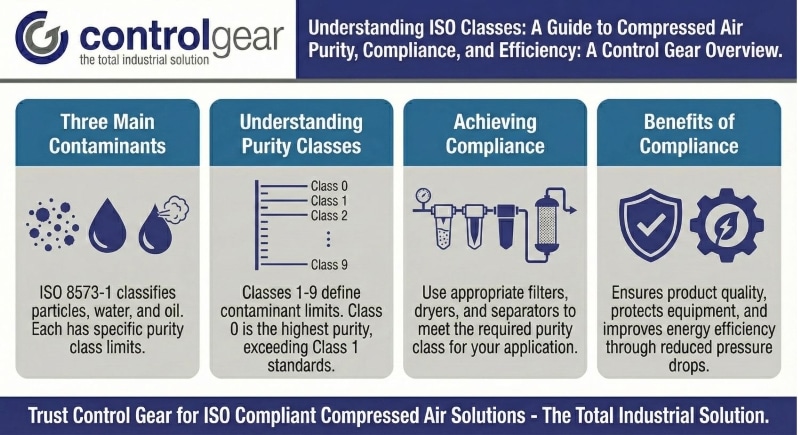
ISO 8573-1:2010 is the international standard for compressed air quality. It classifies and defines compressed air purity based on the maximum allowable concentration of the three main contaminants.
It is a comprehensive quality standard, giving companies a common and clearly understood language in which they can define and audit their compressed air purity with absolute certainty. In the UK, meeting ISO 8573 is the most effective method to also comply with other mandatory legal requirements, for example, BS EN 12021–Specification for breathing air and the Control of Substances Hazardous to Health (COSHH) regulations with their specific Workplace Exposure Limits (WEL).
The Three Contaminants in Detail
The ISO 8573-1 standard classifies air quality using three digits, written as [A:B:C]. Each digit refers to a different contaminant. Lower numbers mean cleaner air.
- A: Solid Particles. These include dust, rust, and pipe scale. They cause abrasive wear on equipment and can contaminate end products.
- B: Water. It can be present as vapour, liquid, or aerosol. Water is the cause of corrosion, microbial growth, and expensive system failures. ISO classes for water are defined using Pressure Dew Point (PDP) temperature – the point at which water vapour will condense. The lower the PDP, the dryer the air and the less of a risk to your process.
- C: Total Oil. This includes oil in all its forms. Oil contamination is particularly damaging as it fouls pneumatic systems and ruins sensitive products. It’s a risk primarily associated with oil-lubricated compressors.
The Truth About ISO Class 0
ISO Class 0 is frequently misinterpreted. It does not mean “zero” or the absence of anything. ISO Class 0 is a user-defined standard with more stringent limits than Class 1.
If true Class 0 limits are claimed, then specific contamination limits are defined and verified by a third-party, independent of the manufacturer. This provides an auditable, objective standard that exceeds Class 1 criteria.
Manufacturers like Atlas Copco rely on equipment certified by independent third parties. TÜV is one of the organisations that provides this assurance. This delivers clear, auditable proof of performance.
Oil-Free vs. Oil-Lubricated: A Strategic Choice
There is one first big decision when it comes to controlling air purity. And that is choosing between an oil-lubricated or an oil-free compressor.
And it’s arguably the most fundamental choice you’ll make.
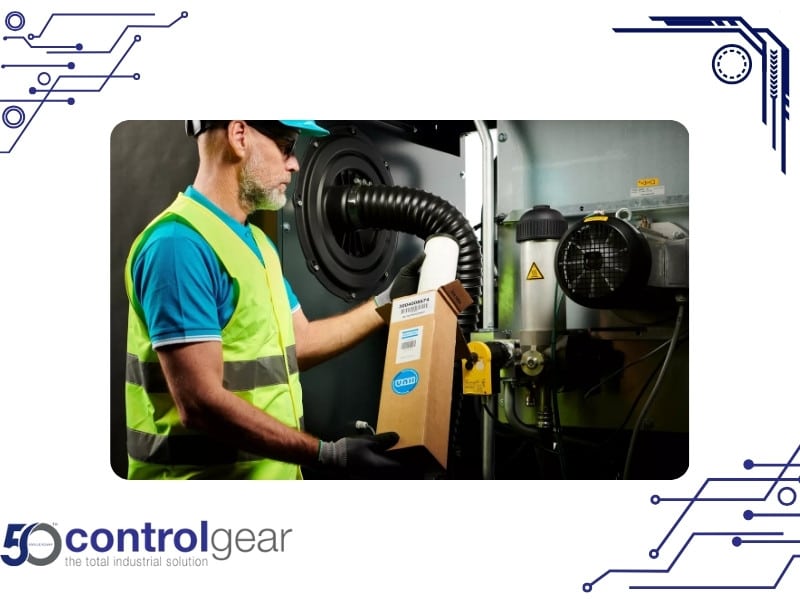
Oil-lubricated compressors have oil in the compression chamber to cool and seal. Even with multi-stage filtration, which can remove almost all traces of oil, the quality of air produced by these systems is still subject to human error and mechanical failures.
The oily condensate produced by these systems is costly and complicated to dispose of. By contrast, an oil-free compressor uses no oil in the compression chamber – delivering 100% oil-free air right at the source.
This is the only way to achieve and maintain certified Class 0 air purity. Beyond superior air quality, oil-free compressors offer significant environmental benefits by eliminating oily condensate disposal. To learn more, read our guide on Choosing Between Oil-Lubricated and Oil-Free Compressors.
Tailoring ISO Purity to Your Industry
Choosing the right ISO class is a balance between your process’s purity requirements and the associated costs. Specifying a class that’s too high leads to unnecessary expenses; one that’s too low can cause catastrophic failures.
- Food & Beverage: The recommended class is 1:3:0 to prevent microbial growth and contamination in food contact and packaging.
- Pharmaceutical & Healthcare: The highest level of purity is non-negotiable. ISO Class 0 is the gold standard for tablet production, sterile packaging, and hospital applications.
- Electronics & Semiconductors: The primary concern is moisture. A pressure dew point of -40°C or lower (Class 2 for water) is critical. Desiccant dryers achieve this. And they also prevent corrosion and costly downtime.
- Automotive: In paint and coating applications, a Class 1 compressed air purity rating of 1:2:1 is often required. This level helps guarantee a flawless finish.
You can also learn about general requirements in our guide, Why Compressed Air Quality is Critical for Your Business.
Air Treatment Solutions for Achieving Purity
Achieving a specific ISO purity class requires a systems-based approach. As an Atlas Copco Premier Distributor, Control Gear provides a full range of air treatment solutions to meet your specific needs.
- The Compressor: Atlas Copco’s oil-free compressors, such as the ZR/ZT series, provide a guaranteed Class 0 foundation.
- Filtration & Drying: You can precisely tailor your air quality using Atlas Copco’s air dryers and multi-stage filtration systems (particulate, coalescing, and activated carbon filters). A complete overview can be found in our Guide to Compressed Air Quality Filters.
Continuous monitoring is also crucial. Advanced systems like Atlas Copco SMARTLINK provide real-time data, while AIRScan audits can detect system inefficiencies. For more on this, read What is Compressor Air Quality Testing, and Why Does it Matter?.
Ensuring UK Compliance and Long-Term Reliability
ISO classes and the finer details of UK regulatory standards are just one aspect of a comprehensive risk management strategy for businesses. There are also very real financial risks from business interruption, product recalls, and reputational damage caused by the less tangible issues surrounding contaminated air.
The path to purity requires proactive maintenance. Control Gear offers a full range of services, including the Guardian Service Plan, to ensure your system consistently meets or exceeds air quality standards in the UK. Our certified engineers perform air quality audits, detect leaks, and provide the expertise to optimise your system for both air quality and energy efficiency.
Regular, professional testing is also non-negotiable. While ISO 8573-1 testing can be complex, our experts can conduct certified audits at the point of use, giving you a clear picture of the air quality delivered to your application. This is particularly important for controlling moisture and avoiding microbial growth, a topic covered in our post, How To Avoid Microorganisms In Compressed Air.
Conclusion
Understanding the various ISO classes for compressed air and what they mean is important for any company that utilises this valuable resource. It is the most important aspect in not only ensuring your product quality, but also protecting your equipment and running a safe, reliable, and compliant operation.
Control Gear’s certified engineers can test, maintain, and optimise your compressed air system to ISO 8573-1 standards while saving you on operating costs.
Book your compressed air quality audit today – ensure compliance, cut operating costs, and protect your production.