

Benefits of HYDAC for Hydraulic Systems
Plant managers face two major costs: high energy bills and unplanned maintenance.
The purchase price of a machine is often only 10-20% of its lifetime cost. Energy (70-80%) and maintenance (10-15%) make up the rest.
Contamination in your system’s fluid is a primary cause of both problems. As filters clog, your system uses more energy. The dirt that gets through causes wear and leads to costly repairs.
HYDAC’s technology is designed to reduce both of these costs. This article explains how.
How Does HYDAC Cut Energy Costs?
HYDAC systems are engineered to directly reduce your energy bills. This is achieved through better filtration and more efficient cooling.
Advanced Filtration
You can reduce energy use with better filtration.
HYDAC filters (like the SUSTAINMICRON® or Optimicron® lines) have up to 30% lower flow resistance. This is known as differential pressure, or $\Delta$p.
Lower resistance means the motor on your pump or compressor doesn’t have to work as hard. This directly cuts your power consumption.
These elements also have a high dirt-holding capacity.
They clog at a slower rate, so the filter lasts longer and the system draws less energy over time. That emphasis on reducing power use delivers a straightforward return on investment – all the more relevant as UK electricity prices continue to climb.
Advanced Cooling
Inefficient cooling is another source of energy waste. HYDAC’s thermal systems keep oil at the correct viscosity (thickness). This includes:
- Air/Oil Coolers (OK-EL series)
- Plate Heat Exchangers (PWT series)
- Shell-and-Tube Units (FUNKE)
- Hybrid Cooling Systems (RFCS)
Cool oil keeps friction in check. And when the temperature stays low, the oil is far less likely to oxidise or turn into varnish – a small thing that makes a big difference to how clean and efficient the system stays over time.

How Does HYDAC Increase Reliability and Service Life?
HYDAC systems are also designed to reduce downtime and maintenance costs. They do this by solving the root causes of contamination and mechanical wear.
You can learn more about the basics in our guide, how hydraulic systems work.
Proprietary Filtration Technologies
Standard filters just catch particles. HYDAC’s specialised elements solve deeper fluid problems:
- Air-X®: Removes trapped air from oil. This allows for smaller, less expensive tanks (up to 40% smaller) that use less oil.
- Stat-X®: Prevents static electricity (ESD) from building up in modern synthetic oils. This static can damage electronics and is a primary cause of varnish.
- Aquamicron®: This element absorbs and traps water from your oil, which prevents rust and cavitation.
What About Offline Fluid Care?
For high-stress systems, offline “kidney” loops continuously clean the oil.
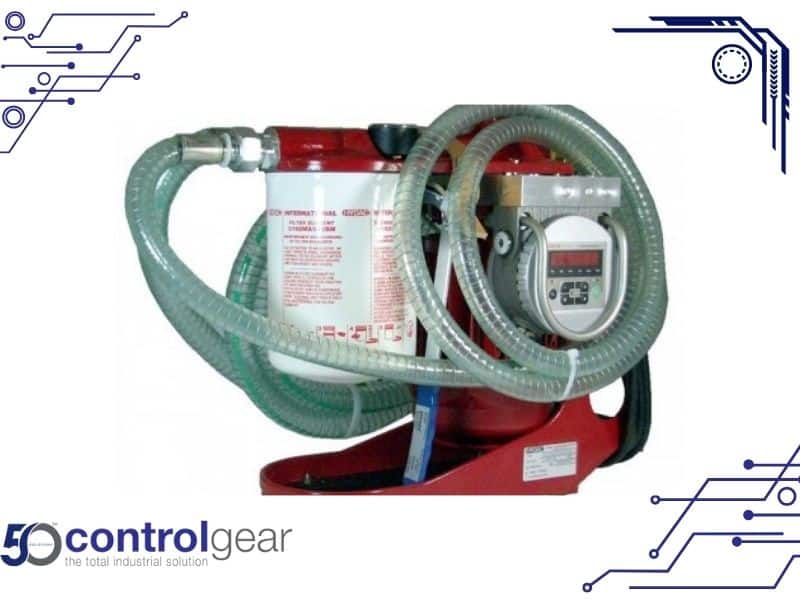
- Fluid Aqua Mobil (FAM): A mobile unit for removing water and fine particles.
- Varnish Elimination Unit (VEU): Specifically removes the byproducts of oil degradation that lead to varnish.
These units run at a controlled low flow, which cleans the oil effectively without shocking the system.
How Do Accumulators Protect Systems?
Pumps can send sharp pressure hits through the line, and those shocks can wear out components before their time.
Hydraulic accumulators – in bladder, piston, or diaphragm form – step in when a pump sends a sudden surge through the line. They soak up that excess pressure, easing the load on sensors, pipe welds, and valves so those parts don’t wear out or crack under the strain.
Because they’re legally treated as pressure vessels, they also come under the Pressure Systems Safety Regulations. That brings a requirement for periodic inspections and formal recertification to keep everything compliant.
How Does HYDAC Enable Predictive Maintenance?
Changing parts on a fixed schedule is inefficient. You either waste money replacing good parts or risk a failure by waiting too long.
HYDAC sensors make it possible to shift toward condition-based maintenance.
In practice, you service the machine when the live data tells you it’s time, not just because the calendar says so. It’s a straightforward step into Industry 4.0 and a more efficient way to keep equipment healthy.
What Do the Sensors Monitor?
- AquaSensor (AS): Measures water content in real-time.
- ContaminationSensor (CS1000): A live particle counter that reports fluid cleanliness (to ISO 4406).
- HYDACLab® (HLB 1400): This sensor monitors the oil’s chemical “fingerprint” (like humidity and conductivity). It can detect oil degradation and varnish formation weeks before it causes a problem.
How Do You Use This Data?
This data is powerful, but maintenance teams are often focused on reactive repairs and daily uptime, leaving little time for data analysis.
Control Gear can help.
We use this sensor data to manage your fluid health. We can spot a problem developing, predict a failure, and schedule a planned service before it stops your production line. This helps improve productivity.
How Can HYDAC Support All Brands?
HYDAC benefits are not just for new machines. The “Betterfit” program allows us to upgrade your existing equipment, even if it’s made by Parker, Pall, Kaeser, or Donaldson.
The Betterfit database has over 70,000 part numbers. We can swap your old filter with a HYDAC element that has 30% lower pressure drop ($\Delta$p).
What this means is you get an immediate energy saving on your existing machine.
This also simplifies your stock management. It allows our technicians to act as consultants, finding ways to cut your energy bill, not just replace a part.
What UK Compliance Requirements Does This Address?
Using HYDAC components and a certified service partner helps you meet your legal compliance duties.
- PSSR: As mentioned, hydraulic accumulators are pressure vessels and require legal inspection and recertification.
- ISO 8573-1 Class 0: For food, pharma, and electronics, air purity is critical. HYDAC’s industrial filtration and lubrication control help ensure your support systems don’t add contamination.
- WRAS/UKCA: We ensure components meet UKCA and WRAS approvals where needed.
- Documentation: Control Gear can take care of the compliance files that sit behind your audits. They keep the paperwork in order and update what needs updating – so you can make sure the right documents are ready when you need them.
Our service teams work across South Wales – Bridgend, Newport, Swansea – and through the West Country, covering Bristol, Gloucester, and Hereford.
Systems built with HYDAC technology generally run more reliably, use less energy, and give you a clearer read on what’s happening inside the equipment.
If cutting energy spend and reducing unplanned stoppages is on your list, speak with the Control Gear team. We can review your existing setup and shape a practical plan to lower your total cost of ownership.
For multi-site operations, we can also streamline filtration and monitoring so every plant works to the same standard.