
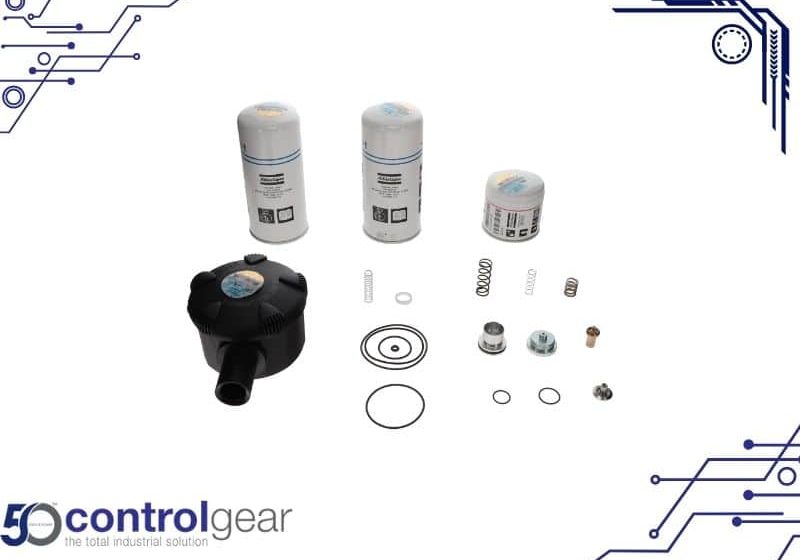
Essential Air Compressor Accessories List
An effective compressed air system relies on more than just the pump itself to operate efficiently. Reviewing an Essential Air Compressor Accessories List helps you identify the components needed to maintain stable pressure and clean air.
At Control Gear, our engineers have spent over 50 years designing industrial layouts across South Wales. We know exactly which add-ons prevent downtime and ensure compliance with PSSR 2000 regulations. Rather than simply listing parts, we integrate the specific equipment required to protect your investment and improve system reliability.
What Are the Fundamental Storage and Tool Accessories?
Why Is Air Receiver Sizing Important?
For optimal system performance, air receiver sizing should provide 1 to 4 gallons storage per CFM of compressor output. Each pressure vessel must have a Written Scheme of Examination (WSE) that details inspection requirements and safety protocols.
An air receiver tank acts as a storage reservoir to handle peak demand spikes without forcing the compressor to cycle constantly. Because these tanks store high-pressure energy, they must meet the Pressure Systems Safety Regulations (PSSR) 2000 (hse.gov.uk). We inspect these vessels during our routine air compressor services to ensure structural integrity. A typical vertical tank holding 500 litres at 11 bar provides the necessary buffer for pneumatic tools.
How Do Hoses Impact Efficiency?
Connection points often cause the biggest efficiency losses in a workshop. It’s actually surprisingly hard to hear these hissing noises over the sound of a CNC machine running at full tilt so they often go unnoticed for months.
A single 3mm leak at 7 bar costs around £600 per year in wasted electricity. We recommend AIRnet piping – a modular aluminium piping system – or industrial hoses with crimped fittings to eliminate these drop-offs.
Finally, pressure regulators maintain constant output to protect sensitive equipment from damage. This stability extends tool life significantly.
Key accessories include:
- Air Receivers: Buffer storage to reduce compressor cycling.
- Pressure Regulators: Maintain constant output pressure.
- High-Quality Hoses: Prevent costly air leaks.
Once your storage and distribution are secure, you must address the moisture generated during compression.
How Do You Achieve ISO 8573-1 Compliance with Air Dryers?
What Is the ISO 8573-1 Standard?
Achieving compliance involves selecting air compressor dryers capable of reaching specific Pressure Dew Points (PDP) defined by the ISO 8573-1 standard. This global benchmark categorises air purity based on water, oil, and particulate content. We analyse your production needs to match the correct dryer technology to the required purity class.
Which Dryer Suits Your Industry?
For general industrial applications, a Class 4 rating is standard. We typically install refrigerated dryers like the Atlas Copco FX or FD series. These cool compressed air to +3°C to condense and remove bulk water.
Critical sectors need stricter control. Food production or pharmaceuticals often mandate Class 1 or 2 purity (-40°C to -70°C PDP). Here, we deploy desiccant dryers like the Atlas Copco CD/BD ranges which use adsorption beads to strip moisture.
Common ISO 8573-1 moisture classes include:
- Class 4 (+3°C): General pneumatic power and assembly.
- Class 2 (-40°C): Outdoor lines and spray painting.
- Class 1 (-70°C): Medical air and electronics.
The British Compressed Air Society (BCAS) advises regular audits to maintain these standards. Once the air is dry, you must filter out the remaining solid contaminants and oil aerosols.
Why Is Multi-Stage Filtration Critical for Equipment Protection?
How Does Filtration Prevent Damage?
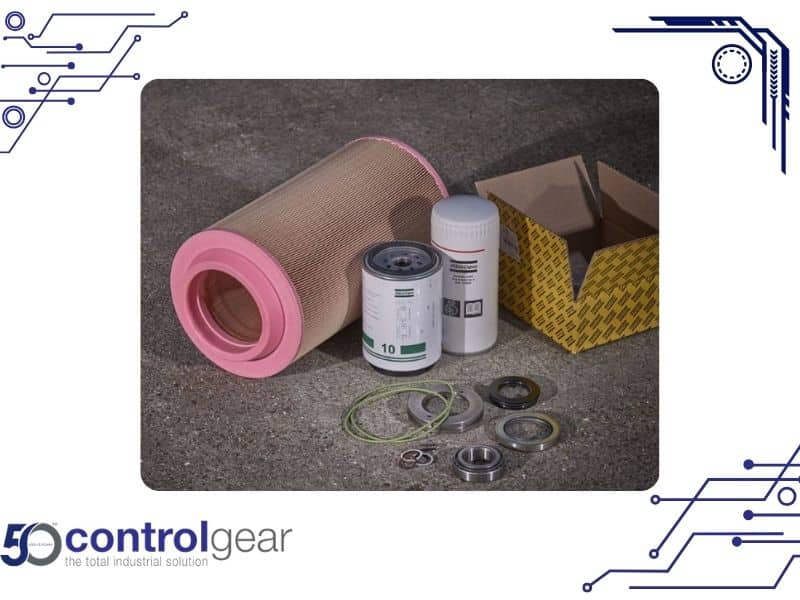
Multi-stage filtration using compressed air quality filters is critical because it removes the oil aerosols and fine particulates that dryers can’t catch, preventing abrasive sludge from destroying downstream pneumatic valves and cylinders. Without a sequence of coalescing filters, oil carryover will contaminate final products and gum up sensitive instrumentation.
Standard general-purpose filters often leave behind oil content up to 0.1 mg/m³. This isn’t clean enough for paint spraying or food packaging.
What Is UD+ Technology?
That’s why we recommend Atlas Copco and their UD+ technology. This 2-in-1 filtration system combines distinct layers to reduce pressure drop by 40% compared to traditional filter combinations.
Lower pressure drops mean the compressor doesn’t have to work as hard to push air through the system, directly lowering your energy bill. The UD+ series delivers three main benefits:
- Removes oil aerosols down to 0.001 mg/m³.
- Maintains a low pressure drop of 0.05 bar.
- Replaces two separate housings with a single unit.
After trapping these contaminants, you need a compliant way to dispose of the oily condensate they generate.
Are You Breaking UK Law with Your Condensate Disposal?
What Does the Water Industry Act 1991 Require?
You are breaking the law if you pour untreated compressor condensate directly into foul sewers or surface water drains. The Water Industry Act 1991 classifies this oily mixture as hazardous waste because it typically contains up to 300 mg/l of oil, far exceeding the standard 20 mg/l limit set by water authorities. Discharging this fluid without treatment can result in unlimited fines or imprisonment under UK environmental regulations.
How Can You Treat Condensate On-Site?
We recommend installing an oil-water separator to treat this waste on-site. The Atlas Copco OSC range uses a patented multi-stage filtration process to separate oil from water before discharge. These units are engineered to ensure compliance with minimal maintenance.
Key features of compliant separation include:
- Dual-stage filtration using polypropylene and activated carbon.
- Clean water discharge with less than 10 ppm oil content.
- Test kits to verify water quality before disposal.
Once your condensate is clean, you must consider how to move compressed air efficiently to your tools.
Does Your Piping System Cause Pressure Drops?
Every 1 bar drop in system pressure results in a 7% energy increase, making efficient piping essential for cost control.
How Do Materials Affect Pressure?
Your piping system causes pressure drops if the internal surface creates friction or if leaks develop at joints. Traditional materials like galvanised steel corrode over time, narrowing the pipe diameter and forcing your compressor to work harder. This resistance lowers the available pressure at the point of use.
We often see older sites relying on galvanised steel. While initially strong, it rusts internally over time.
Trying to retrofit new lines onto that old heavy pipe work is a complete nightmare for our technicians because the threads never seem to line up properly anymore. This creates a rough surface that restricts airflow and contaminates your clean air with rust particles.
PVC is another common mistake we encounter. It becomes brittle under heat and pressure. If it shatters, it creates a serious safety hazard for your staff.
Why Choose Aluminium Over Steel?
To solve these issues, we install the Atlas Copco AIRnet system. This modular compressed air pipework uses lightweight aluminium with a smooth inner bore. It eliminates corrosion entirely and minimises friction.
Here is how the materials compare:
| Feature | Galvanised Steel | Atlas Copco AIRnet |
| Corrosion Risk | High (Rusts internally) | None (Aluminium alloy) |
| Friction Factor | High (Rough surface) | Low (Smooth bore) |
| Leak Potential | High (Threaded joints) | Low (O-ring seals) |
AIRnet fittings use a strong seal to prevent the leaks common with threaded steel connections. This efficiency helps maintain stable system pressure. Once your distribution network is secure, you need to verify the system’s ongoing performance.
Treating accessories as an investment is important for reducing your Total Cost of Ownership. We provide the Total Industrial Solution to ensure your system maintains strict PSSR compliance.
Contact Control Gear’s expert team in South Wales today for a complete audit or to discuss our Guardian Service Plans.