
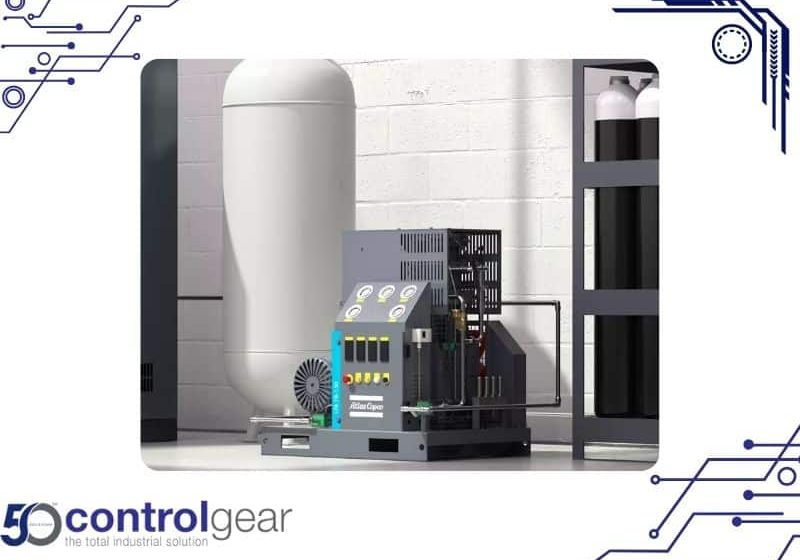
How to Prevent Rust in Air Tanks
How to prevent rust in air tanks starts with controlling condensate: drain the receiver, dry the air, check the vessel, and treat inspection as part of the maintenance plan. Draining helps, but it does not prevent internal corrosion if humid air keeps cooling inside the receiver every shift.
Control Gear Group, specialists in compressed air and industrial equipment, has supported South Wales and surrounding regions since 1973. We’ve seen receivers on steel, food, pharmaceutical and aerospace sites where a cheap drain valve protected a five-figure asset. This guide gives the practical sequence we use: remove water, lower dew point, inspect metal, and know when replacement is safer than treatment.
What Causes Corrosion Inside Air Receivers
Rust starts when compressed air leaves liquid condensate inside a steel receiver. Warm, humid air is compressed, then cools below dew point inside the vessel, so water drops out and reacts with iron. Because that reaction reduces wall thickness from the inside, the first visible warning may arrive late.
Why Water Pools in an Air Tank
An air receiver stores potential energy as compressed air and buffers demand so the compressor does not cycle constantly.
Atlas Copco technical guidance (atlascopco.com) describes it as the buffer between compressor output and fluctuating downstream demand. The same vessel also behaves like a secondary heat exchanger, so cooling air drops below dew point and releases water inside.
Approximately 10% of this moisture tends to condense and pool at the bottom of the receiver. When warm, humid ambient air is compressed and then cools, water vapour turns into liquid. This moisture reacts with the iron in steel and starts an electrochemical process, so the prevention plan has to start with moisture removal rather than paint choice.
Why Industrial Sites Need a System View
Internal corrosion is rarely caused by one missed drain. It usually appears after a chain of small failures, such as poor compressor room ventilation, a blocked separator, an undersized dryer, failed drain timing, or maintenance records that don’t show whether checks were completed. That is why a receiver should be reviewed as part of the whole compressed air installation, not as an isolated tank.
Air quality targets also matter. ISO 8573 gives a recognised framework for compressed air contamination classes, including particles, water and oil. Even when a site does not need ultra-dry air for food, pharmaceutical or instrument applications, the standard helps maintenance teams define the dryness level they expect and then check whether the dryer is still achieving it.
The Prevention Plan for Air Compressor Receivers
Most sites start with the drain, and that is right. The problem is stopping there.
Use this hierarchy on an industrial site:
- Remove liquid condensate before it sits in the bottom seam.
- Lower the dew point before air enters the receiver.
- Keep aftercoolers, filters and dryers working to specification.
- Treat coatings and anodes as engineered protection, not shortcuts.
- Add automatic or smart drains where human routine is unreliable.
- Record checks inside the preventive maintenance system so missed tasks are visible.
Drain Condensate Before It Turns Acidic
Because rust cannot form without water, eliminating moisture is the most critical preventative measure. Condensate that collects in a receiver is usually acidic, and it is the main cause of internal corrosion. Manual drains require an operator to physically open the valve daily, or twice daily in humid or winter conditions, to expel water.
Where manual valves remain, follow a fixed baseline process like the one in our guide to how to drain air compressor tanks. In South Wales plant rooms, we also check whether the drain line is blocked, whether the oil-water separator is sized correctly, and whether operators have stopped draining because the valve sprays contaminated condensate across the floor.
Making Draining Reliable
A drain that is difficult to reach, noisy, messy or hidden behind stored stock won’t be used consistently. Fit a reliable automatic drain where manual routines keep failing, but make sure the discharge route is legal, visible and connected to a suitable condensate treatment system. It’s also worth checking the valve during compressor servicing, because a blocked automatic drain can create the same corrosion risk as no drain at all.
Air Treatment Before the Receiver
Clean inlet air means removing moisture, oil aerosol and particulate before they reach valves, cylinders, tools and the receiver base. A wet receiver can act as a primary moisture separator, reducing the load on downstream drying equipment. It can also buffer sudden demand spikes without pushing liquid water into sensitive equipment, provided the drain and separator are working.
Cooling and First Separation
A clean system usually needs an aftercooler, dryer, filters, a working separator and correct drain positioning.
An aftercooler immediately cools the hot compressed air, forcing water vapour to drop out before it enters the main vessel. British Compressed Air Society maintenance guidance (bcas.org.uk) warns that poor maintenance increases energy use and reduces reliability.
Dryer selection should match the process, not just the compressor size. Refrigerant dryers are common for general plant air, while desiccant dryers are used where low pressure dew points are needed for instrumentation, paint, winter pipe runs or critical production. Don’t rely on a dryer nameplate alone.
Dew Point and Drain Checks
Check the actual dew point, separator performance, bypass valves and filter differential pressure during routine servicing. If these readings drift, the receiver may be getting wet even when the drain appears to work. A weekly drain check is useful, but it cannot compensate for a dryer that has lost control of moisture load.
Treatment and Automation Choices
Epoxy resin coatings can protect the inside of a new or professionally refurbished vessel. The coating can resist water, acids and alkalis, but only when the surface has been prepared correctly. For industrial receiver work, that means rust removal by sandblasting or shot blasting to a near-white metal finish, classified as Sa 2.5 cleanliness level.
External corrosion needs a different control plan from internal condensate. If a receiver is exposed to weather, washdown, chemical vapour or coastal air, ISO 12944 can help specify coating durability for steel protection. That doesn’t remove the need for inspection, but it gives procurement and maintenance teams a clearer basis for coating selection.
Technological interventions are evolving. Industrial Internet of Things sensors and smart auto drain valves are becoming more practical for predictive maintenance and zero-loss moisture management. Preventing moisture reduces corrosion risk, but the receiver still stores energy, and stored energy brings legal duties.
Inspection, Testing and Legal Duties for Air Receivers
The most critical legislation is the Pressure Systems Safety Regulations 2000, often shortened to PSSR 2000, because compressed air receivers store energy that can injure people if the vessel fails. The regulations apply to pressure systems containing relevant fluids, including compressed air at a pressure greater than 0.5 bar above atmospheric pressure.
What the Regulations Require
Under the Pressure Systems Safety Regulations 2000 (hse.gov.uk), a qualifying pressure system needs a written examination regime before use.
HSE guidance L122 explains the Approved Code of Practice behind these duties and is the document many duty holders use when checking whether their Written Scheme of Examination is adequate. Operating a relevant system without a current Written Scheme is illegal in the UK.
A quality management system should support the legal process rather than replace it. ISO 9001 and ISO 9001:2015 help organisations control maintenance records, supplier competence, calibration and corrective actions. They don’t decide whether a pressure vessel is safe, but they do help prove that inspection findings, defects and repairs are managed consistently.
What Examination Finds
A statutory examination goes beyond a walk-around. Inspectors look at the external tank surface for visible signs of rust, pitting or cracks, particularly around weld seams and the bottom drain. They may also use an endoscope or service port to check for rust scale inside the vessel.
A competent inspection should include these checks:
- The competent person should complete internal examinations, often through inspection ports, to check for scale, sludge, rust, pitting and corrosion.
- The service team should remove and pressure test safety relief valves to confirm that they vent at the correct pressure, usually set at 10% above working pressure.
- The inspection plan should use Ultrasonic Thickness Testing where visual inspection is impossible or insufficient.
- The maintenance record should confirm that automatic drains, dryer alarms and discharge routes are working.
- The site team should log defects, corrective actions and next examination dates in the preventive maintenance system.
When Replacement Beats Treatment
Corrosion irreversibly compromises safety once an air receiver’s structural integrity has been reduced by internal rust. At that point, the tank often has to be replaced rather than repaired to prevent catastrophic failure. That is the point forum threads often miss.
A coating can slow corrosion on sound metal, but it cannot restore lost wall thickness. Ultrasonic Thickness Testing is the standard non-destructive testing method used to measure remaining wall thickness and detect hidden corrosion. If UTT finds localised thinning near the bottom drain, pitting around weld seams, or widespread internal scale, the maintenance decision shifts from rust prevention to vessel replacement.
Replacement Triggers
No production manager wants to explain why a known pressure vessel defect was left in service. Replacement also avoids wasting money on coating, cleaning or drain upgrades for a vessel that will still fail inspection. When the cost of downtime, insurance scrutiny and legal exposure is included, early replacement can be the lower-risk commercial decision.
Why Industrial Buyers Should Care
Rotary screw systems are common on production sites. Fact.MR estimates that rotary screw compressors make up 48.5% of the UK industrial air compressor market, and that manufacturing accounts for 32.8% of UK industrial air compressor demand in 2025.
For procurement teams, this is not a niche maintenance issue. It affects the compressor rooms that feed pneumatic tooling, Festo and Norgren valve islands, food-grade air points, spray equipment and breathing air stations. That’s where small maintenance decisions decide whether the inspection record stays clean.
A Practical Site Checklist
A useful receiver check starts with evidence, not assumptions. Ask for the latest Written Scheme, examination report, drain maintenance record, dryer service data and dew point readings. If those records are missing, the site doesn’t yet have a reliable basis for deciding whether the tank is protected.
Walk the Compressor Room
Next, walk the compressor room while the system is running. Listen for stuck drains, check whether condensate is reaching the separator, look for bypassed filters, and note whether the receiver is sitting in a damp or poorly ventilated area. These observations often explain why a tank keeps collecting water even after operators say it is being drained.
Finally, connect the findings to actions. A low-risk site may only need better drain discipline and scheduled checks, while a high-risk site may need dryer repair, UTT, coating assessment or replacement planning. The aim isn’t to make the receiver look better.
It’s to keep the compressed air system safe, dry and legally defensible.
FAQ
These answers are written for industrial receivers, not hobby compressors.
What Do I Need so I Don’t Get Rust in My Air Tank?
You need dry inlet air, a working drain, correct receiver siting, routine inspection and a legal examination regime where the vessel falls in scope. Fit an automatic or zero-loss drain if manual drainage is unreliable, then verify dryer dew point, filter condition and condensate disposal during planned maintenance.
Can I Put WD-40 on Metal to Prevent Rust?
WD-40 can displace moisture on exposed external metal for a short period, but it is not an internal receiver treatment. It can contaminate compressed air, affect downstream process controls and give false confidence. For industrial systems, stop the water source and inspect the metal rather than spraying oil into the vessel.
How to Prevent Rust in a Tank?
Prevent rust by breaking the water, oxygen and steel contact chain. Drain condensate, lower the dew point with drying, keep aftercoolers clean, protect external paint, inspect the bottom drain and weld seams, and use UTT or internal inspection when corrosion risk is higher.
Does Vinegar Stop Rust on Metal?
Vinegar can dissolve light surface rust on removable non-pressure parts because acetic acid reacts with iron oxides. It does not protect an air receiver and shouldn’t be introduced into a pressure vessel. Acid residue can worsen corrosion if it is not neutralised, rinsed and dried under controlled conditions.
If your receiver is holding water, showing pitting, or missing inspection records, ask Control Gear to assess the compressed air system before the next production shutdown.
Our engineers cover Wales and the surrounding regions, and we can check drainage, dryers, relief valves and examination requirements in one site visit.