Air Compressors for Chemical Industry
In chemical manufacturing, compressed air isn’t a luxury; it’s the fourth utility, just like electricity, gas, and water. The quality and dependability of your compressed air have a direct effect on your product purity, your safety and the efficiency of your processes. If it stops, it’s not just a minor nuisance – it’s a process-critical failure that can lead to expensive downtime, safety hazards and lost batches.
This guide will take you through the essential design, compliance and maintenance considerations to help you specify a compressed air system that delivers Class 0 purity, protects your process and is compliant with UK regulations for the chemical sector.

The Critical Difference: Energy Air vs. Active Air in Chemical Processes
Not all compressed air serves the same function. Understanding the distinction between Energy Air and Active Air is the foundation of proper system design.
- Energy Air powers equipment. It performs mechanical work, driving pneumatic tools, conveyor systems, and actuators on control valves. While its quality is essential for equipment protection, it does not come into contact with the product.
- Active Air is part of the process. It touches the product directly, for example for aeration, pneumatic conveying or drying. The air quality is critical, because it directly influences the quality of the final product.
Tip: There is no compromise on the Active Air application for certified oil-free air for a reason, it is an absolute requirement against contamination.

Key Applications for Compressed Air in Chemical Plants
Uses for Compressed Air: The universal nature of compressed air means it is required at almost every stage of production for various essential applications such as:
- Process Air: Employed directly in reactions for aeration, agitation and mixing or as a reactant for oxidation.
- Material Handling: Pneumatic conveying provides a safe, clean way to move powders and granules, while air-operated diaphragm pumps (AOD pumps) transport liquid materials that are volatile or corrosive.
- Instrumentation & Control: Supplies clean, dry air to drive the pneumatic network of control valves and actuators that control plant operations. Find out more about the components that make up Process Valves & Actuators.
- Safety & Environment: Powers critical fail-safe systems such as emergency shutdown (ESD) valves, purges pipelines of flammable or toxic materials and forms air curtains to contain dust or fumes.
- On-Site Gas Generation: Used as the feedstock for nitrogen generators to create an inert atmosphere to store and process materials, removing the ongoing cost, safety, delivery issues and storage hazards of bulk nitrogen or oxygen purchases. Discover the Benefits of On-Site Nitrogen Generation.
Why Air Purity Matters: Understanding ISO 8573-1 Standards for Chemicals
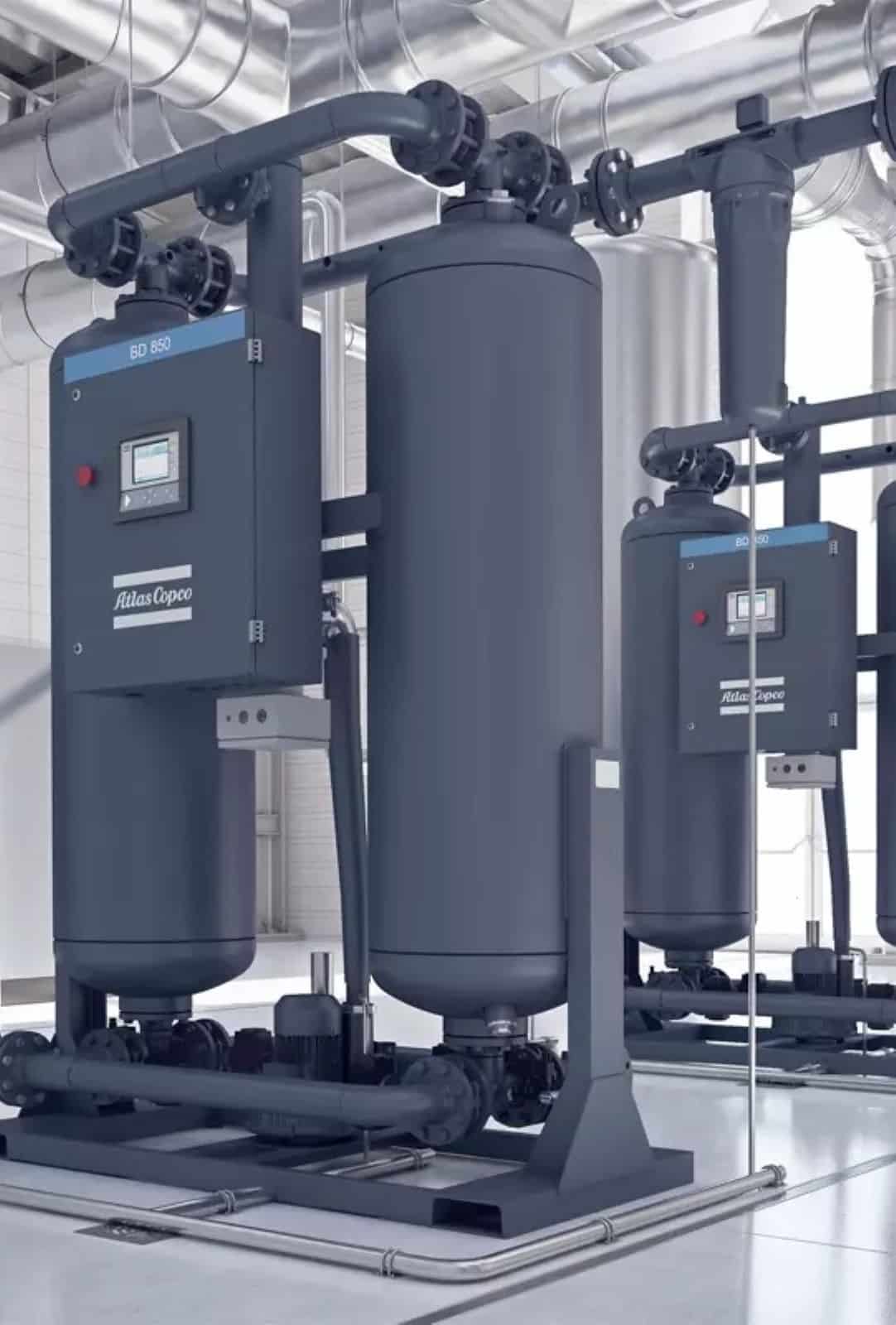
Particles, water and oil can all have detrimental effects in chemical applications. Contamination can cause product spoilage, unplanned downtime and damage to your brand reputation. The global standard for compressed air purity is ISO 8573-1:2010. It breaks down contaminants into three classifications:
Solid Particles: Dust, rust, microorganisms
Water: Pressure Dew Point (PDP) is the temperature at which vapour turns into liquid
Total Oil: Liquid, aerosol and vapour
For critical chemical processes where contamination risk is highest, only the most stringent purity classes for oil content are acceptable:
| ISO Class | Oil Content (mg/m³) | Application Example |
|---|---|---|
| Class 1 | ≤ 0.01 | Energy Air, general process use |
| Class 0 | User-defined, stricter than Class 1 | GMP, Active Air, direct product contact |
Specifying certified Class 0 oil-free air isn’t just good practice—it’s the ultimate insurance policy for safety, quality, and regulatory compliance. Regular Compressed Air Quality Testing verifies that these standards are consistently met.
Selecting the Right Oil-Free Compressors for the Chemical Industry
The most critical technology decision is between a certified oil-free design and a system that relies on filtration.
- Certified Oil-Free Compressors: Engineered so that no oil ever enters the compression chamber. This design eliminates the risk of contamination and is the only way to guarantee Class 0 air purity.
- "Technically Oil-Free" Systems: Use an oil-injected compressor with downstream filters to remove oil. This carries an inherent risk of catastrophic contamination if a filter element fails.
Control Gear recommends Atlas Copco’s industry-leading oil-free technologies for chemical applications:
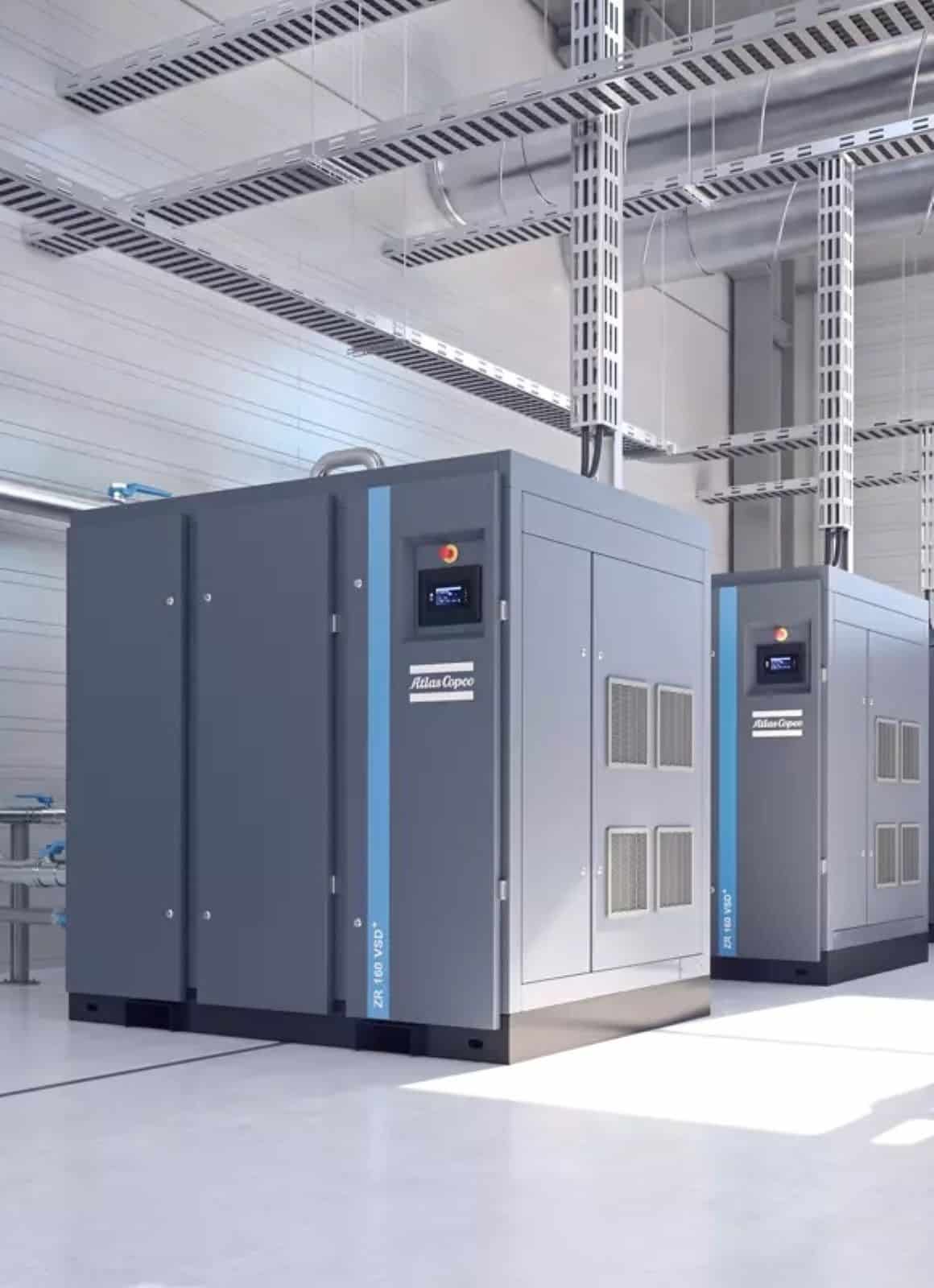
- Rotary Screw Compressors (ZR/ZT Series): These Class 0 certified workhorses are built for 24/7 reliability.
- Centrifugal Compressors (ZH Series): Ideal for large-scale facilities, these machines provide exceptional energy efficiency for high, stable baseload air demand. For more detail, read Centrifugal Compressors – Everything You Need to Know.
For processes with fluctuating air demand, Variable Speed Drive (VSD) is essential. Atlas Copco’s VSD technology reduces energy use by up to 35–50% by precisely matching air output to plant demand, making it ideal for chemical processes with variable loads. With energy representing over 70% of a compressor's lifecycle cost, VSD technology offers one of the fastest returns on investment in chemical plant optimisation. Explore the differences in our guide on Oil Versus Oil-Free Air Compressors.
Ensuring Legal Compliance in the UK Chemical Sector
UK HSE regulations, including DSEAR, ATEX and PSSR, are not a “nice to have” they are a legal requirement, and the responsibility of the system designer to ensure, by design and supporting documentation, that compliance has been achieved and is maintained.
- DSEAR: Dangerous Substances and Explosive Atmospheres Regulations 2002 – places an obligation on the employer to control risk through the assessment of risk and zoning of hazardous areas.
- ATEX: The ATEX Directive lays down the requirements for placing equipment including compressors, in an atmosphere in a DSEAR-zoned Zone, which must be certified so that it can be guaranteed not to become an ignition source itself.
- Consequences of non-compliance: By the HSE will see their lawyers at the door to take enforcement action, issue fines, or shut the plant down, until deemed compliant.
- For customers safety:, As well as critical plant and assets protection, is also a primary concern. With PSSR, Written Schemes of Examination (WSE) are a legal requirement to ensure safe operation of all pressure vessels, and a “competent person” must provide written certification that the scheme is in place and will maintain safety.
Control Gear provide assistance to customers with PSSR-compliant Written Schemes of Examination and ATEX-safe equipment selection.
Engineering a Complete System for Peak Performance
Compressed Air System Design Checklist
- Oil-Free Compressor (Class 0)
- Desiccant Dryer (PDP ≤ -40°C)
- Multi-Stage Filtration
- SMARTLINK Monitoring
- DSEAR/ATEX-compliant components
- PSSR-compliant documentation
Air Treatment: Dryers and Filtration
Removing water vapour is vital to prevent corrosion and product contamination. The choice between refrigerated dryers (for a +3°C PDP) and desiccant dryers (for PDPs as low as -70°C) depends on the application's specific needs. Incorrect dryer selection is one of the most common causes of system inefficiency or moisture-related contamination in chemical plants.
In tandem with drying, multi-stage filtration is essential to remove particulates, oil aerosols, and vapours. A typical system includes pre-filters, high-efficiency coalescing filters, and activated carbon filters, designed to meet ISO 8573-1 Class 1 or Class 0 air standards.
Distribution Pipework
The pipework delivering air must not introduce contaminants. While traditional galvanised steel corrodes over time, modern alternatives prevent this. Aluminium systems like Atlas Copco’s AIRnet are chemically inert and corrosion-resistant—ideal for harsh process environments.
Remote Monitoring and Predictive Maintenance
In contemporary systems, intelligent monitoring is harnessed to optimise uptime. Atlas Copco’s SMARTLINK monitoring system offers real-time insights into the health of your system. It is a remote monitoring solution that facilitates predictive maintenance and immediate notifications of pressure drops, filter obstructions or unusual operating trends.
Why Work With Us?
🔍 At a Glance: What You Need
- ✅ Use Class 0 certified oil-free air for Active Air applications
- ⚠️ Avoid “technically oil-free” systems in critical chemical processes
- 📏 Design to ISO 8573-1 air purity standards
- ⚙️ Ensure compliance with DSEAR, ATEX, and PSSR
- ♻️ Incorporate VSD for energy efficiency
- 🛠️ Maintain with remote monitoring and scheduled audits
Your Partner for Compliant & Efficient Compressed Air
Control Gear has been offering leading-edge compressed air expertise to the industrial sectors throughout South Wales, Mid Wales, West Wales and the West Country for over 50 years. We are an Atlas Copco Premier Distributor and are accredited to ISO 9001, 14001 and 45001 standards. We offer a complete service from system design and installation to preventive maintenance and 24/7 emergency support.
Our turnkey systems help ensure your chemical manufacturing process is safe, compliant and efficient.
✅ Looking to optimise your air system for chemical production? Contact Control Gear for a site survey, risk assessment, or compressed air audit.
A compressed air system in a chemical plant is a critical asset. Its design and maintenance demand a strategic approach focused on absolute purity, guaranteed compliance, and total energy efficiency. Partnering with an expert provider is the most effective way to manage risk and ensure your fourth utility is a source of reliability, not a liability.
Speak with our technical team to book a compliant air system design consultation, risk assessment, or audit tailored to your chemical facility.